How to Choose a Software Development Company: 12 Questions to Ask First
HM
Helmy Maulidina
Marketing Director
Choosing a development partner is hard because most vendors sound the same in a sales call, and the real differences only surface once the project is underway. This guide gives you the questions that expose those differences early, before you sign anything.
Why This Decision Is Harder Than It Looks
Choosing a software development company is difficult because most vendors sound identical in a sales call. The differentiators only show up once a project is underway, by which point switching is expensive.
The good news is that the right questions, asked before signing, surface most of those differentiators early. A vendor's answers to direct, specific questions reveal far more than their portfolio or pitch deck does.
What this guide covers: why vetting matters more than portfolio browsing, the 12 questions worth asking every shortlisted vendor, a comparison table of good versus vague answers, and the red flags that should end a conversation early.
Questions About Estimating and Process
Ask how they scope a project before quoting, whether the estimate is itemized, and how they handle mid-project scope changes. Vague answers here predict vague invoices later.
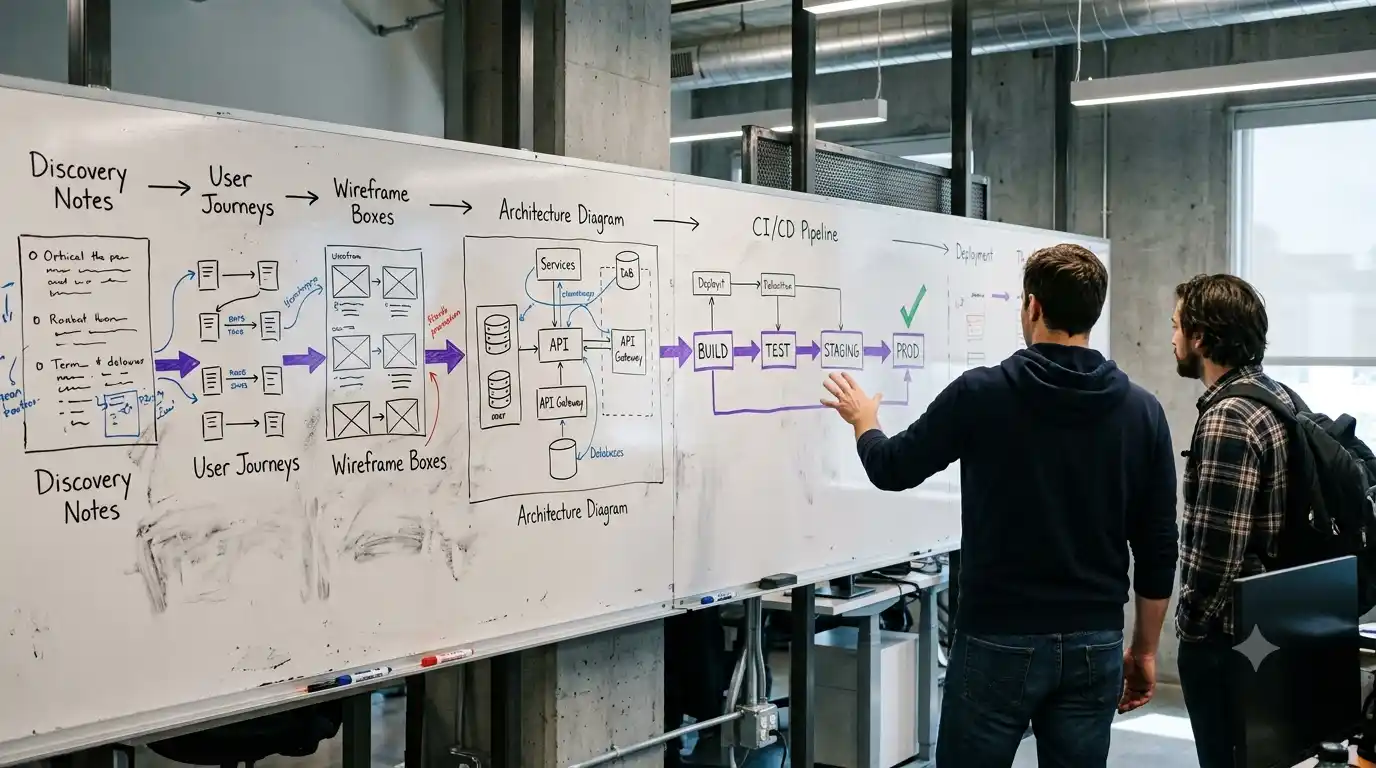
Also ask what their discovery phase actually produces (a requirements document, wireframes, a technical spec) versus just a verbal agreement. A vendor with no tangible discovery output is skipping the step that prevents scope creep.
In our own project scoping calls, the number one objection we hear is that a previous vendor's estimate 'kept growing' after work started. That almost always traces back to a discovery phase that was rushed or skipped entirely.
Questions About Ownership and Communication
Ask who owns the source code and infrastructure after launch, and get it in writing. Some vendors quietly retain code ownership or host on accounts you cannot access, creating lock-in disguised as convenience.
Ask how often you will get updates, and in what format. A weekly demo is a far stronger signal than a monthly status email. Regular, working-software updates mean you catch misalignment in weeks, not months.
If you are unsure whether your business even needs a custom build yet, our guide on signs you need custom software is a useful gut check before you start vendor conversations at all.
Questions About Post-Launch Support
Ask what happens the day after launch. Is there a support plan, an SLA, a named point of contact? A surprising number of vendors have detailed onboarding but no plan for the months after go-live.
Also ask how they handle bugs found post-launch versus new feature requests, since conflating the two is a common way support costs balloon unexpectedly.
The 12 Questions, Good Answer vs. Vague Answer
Question
Good answer
Vague answer
How do you scope a project?
Structured discovery phase, written requirements
'We'll figure it out as we go'
Is the estimate itemized?
Broken down by phase and deliverable
Single lump-sum number
Who owns the code?
Client owns it fully, in writing
'It's complicated' or unclear
How often do we get updates?
Weekly working demos
'We'll email you'
What's your post-launch plan?
Documented support tier and SLA
'We'll deal with it if something breaks'
Red Flags That Should End the Conversation
A vendor who quotes a fixed price before any discovery call is either underpricing to win the deal or planning to make it back in change requests. Neither outcome favors you.
Be equally cautious of a vendor who cannot name a single project that failed or ran over budget. Every experienced team has had one. The honest ones can explain what they changed afterward.
FAQ
Should I choose the cheapest quote among shortlisted vendors?
Not automatically. Compare what is included in each quote first (QA, post-launch support, code ownership). The cheapest quote often excludes items a higher quote bundles in.
How many vendors should I get quotes from?
Three is usually enough to spot patterns in scoping quality and communication style, without dragging out the decision for weeks. More than five tends to create decision fatigue rather than better information.
Does company size matter more than experience?
Experience with your type of project matters more than headcount. A smaller, focused team with relevant experience often outperforms a larger agency spreading attention across many client types.
What is a reasonable discovery phase length?
For most focused projects, one to three weeks is typical. Longer than that without a clear deliverable is a sign the discovery process itself may be poorly structured.
Should I ask for references from past clients?
Yes, and ask specifically about how the vendor handled a problem, not just whether the client was happy. How a team responds under pressure tells you more than a satisfied testimonial does.
Is a written contract with milestones necessary?
Yes, always. Milestone-based contracts with clear deliverables protect both sides and give you natural checkpoints to reassess before too much budget has been spent.
About the author
HM
Helmy Maulidina
Marketing Director
Helmy Maulidina leads marketing at Mauvelab, where she owns the organic-search strategy behind the company's B2B SaaS and custom-software content. She has spent a decade building demand for technical products, pairing hands-on SEO and content architecture with a working knowledge of how engineering teams actually ship, so that Mauvelab's writing ranks for the terms buyers search and guides them toward a strategy call.


.webp)
.webp)