Custom Software Development Cost in 2026 (Itemized, No Surprises)
HM
Helmy Maulidina
Marketing Director
Custom software pricing can look like a black box, with quotes ranging from a few thousand dollars to six figures for what sounds like the same project. This guide breaks the number down into its real components so you can sanity-check any estimate you receive.
What Custom Software Actually Costs in 2026
Custom software development cost typically ranges from $30,000 to $150,000 for a focused business application, with complex multi-system builds running higher. The wide range exists because cost is driven by scope, not by a fixed formula.
Most vendors are vague about this on purpose, because a vague number is easier to adjust upward mid-project. That vagueness is exactly what erodes buyer trust and makes 'custom software' sound like a blank check.
This guide breaks the number down into its real components, so you can sanity-check any quote you receive. What this guide covers: the main cost drivers, an itemized breakdown by project phase, a comparison table of cost by project size, the factors that quietly inflate budgets, and how to keep an estimate honest from kickoff to launch.
The Real Cost Drivers
Four factors move the number more than anything else: number of user roles, number of external integrations, data complexity, and whether the UI needs to be built from scratch or can use an existing design system.
A single-role internal tool with one integration sits at the low end of the range. A multi-role platform with several third-party APIs, custom reporting, and compliance requirements sits well above it.
In our own project scoping calls, the number one objection we hear is 'why does this cost so much more than the app I saw online for $5,000.' Usually that $5,000 app was a template with none of the integrations the buyer actually needs.
Itemized Breakdown by Project Phase
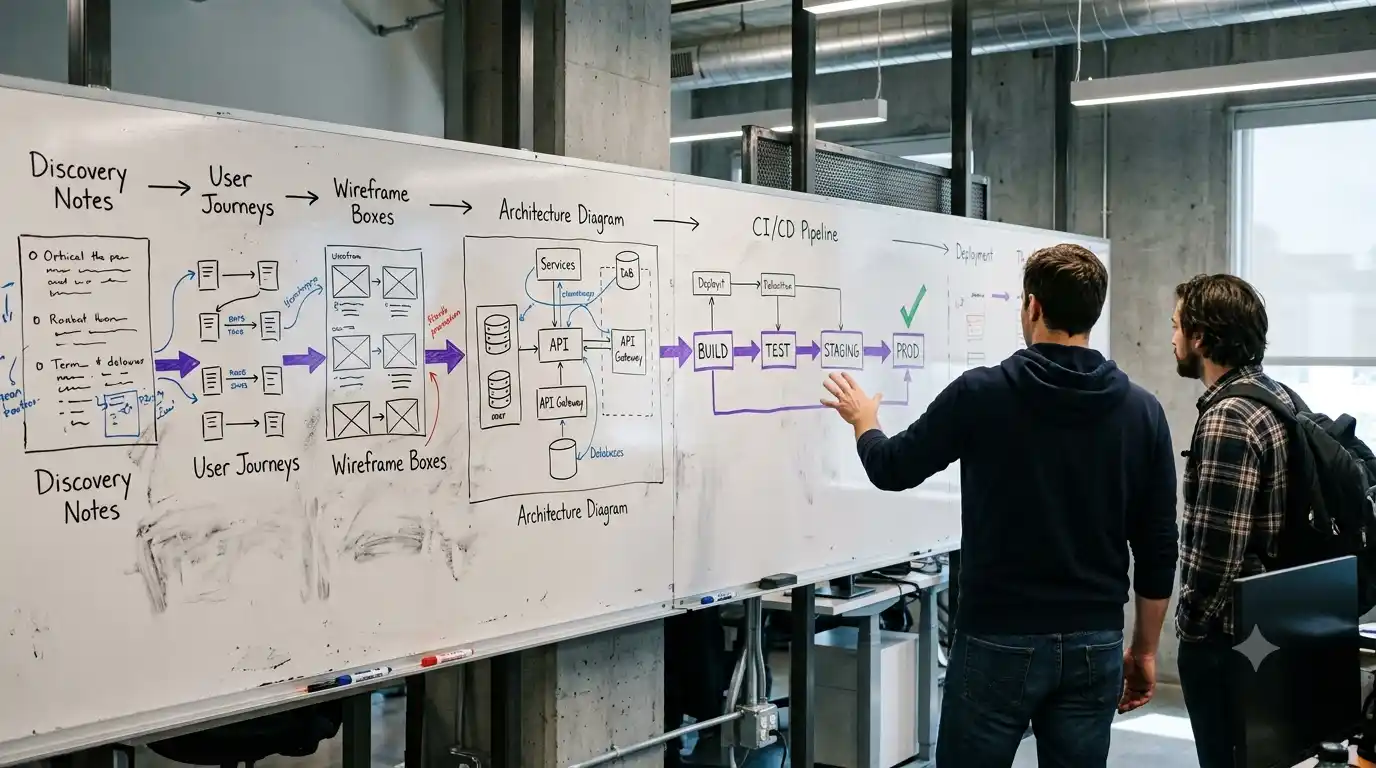
A typical custom build allocates roughly 15% to discovery and scoping, 50% to core development, 15% to integrations and data migration, 10% to QA and testing, and 10% to launch and stabilization. These proportions shift with project type, but discovery should never be skipped.
Discovery is the phase most often cut to save money, and it is the phase that most reliably prevents scope creep later. Time spent here maps requirements against actual user workflows before a single line of code is written.
QA and testing also get compressed under deadline pressure, which is a false economy (bugs caught after launch cost several times more to fix than bugs caught in development).
Cost by Project Size: A Comparison
Project size
Typical range
Example scope
Small internal tool
$15,000–$40,000
Single workflow, one user role, one integration
Mid-size business app
$40,000–$90,000
Multiple roles, a few integrations, custom reporting
Complex platform
$90,000–$150,000+
Multi-tenant, several integrations, compliance needs
These are industry-typical figures, not a quote for any specific engagement. Actual pricing depends on your requirements and should come from a scoped estimate.
What Quietly Inflates the Budget
Scope creep during development is the single biggest budget inflator, usually introduced by stakeholders adding 'small' requests after requirements are locked. Each small request re-touches design, code, and testing, so the cost multiplies beyond what it looks like.
Poorly documented legacy systems are the second biggest driver, since integrating with an undocumented internal database or API takes far longer than integrating with a well-documented one.
If you are still deciding whether a custom build is the right move at all, our build vs. buy framework is worth reading before you request quotes, since it shapes how tightly you can scope the ask.
Keeping an Estimate Honest
Fixed-scope, fixed-price quotes only work when requirements are frozen before the quote is given. Otherwise, it is a guess wearing a fixed-price costume. A more honest approach ties estimates to a locked discovery phase, then re-quotes only if scope genuinely changes.
Ask any vendor how they handle scope changes mid-project, and how detailed their itemized quote actually is. A quote that is a single number with no breakdown is a red flag worth pressing on. We cover this and other vetting questions in our guide to choosing a software development company.
FAQ
Why do custom software quotes vary so much between vendors?
Vendors scope differently, some including QA, testing, and post-launch support, others quoting only development hours. Always compare what is actually included, not just the headline number, before judging a quote as high or low.
Is there a way to reduce custom software development cost without cutting corners?
Yes, scope tightly around the highest-impact workflow first, and phase later features into a version two. Launching a focused product sooner reduces risk and cost more than trying to build everything at once.
Does custom software cost include ongoing maintenance?
Usually not in the initial quote. Budget separately for maintenance, typically a percentage of the build cost annually, covering security patches, hosting, and minor updates after launch.
How accurate is a quote given before discovery?
Treat it as a rough range, not a commitment. Reliable, itemized numbers only emerge after a discovery phase maps actual requirements. Any tighter estimate given earlier is more marketing than engineering.
What is the cheapest way to validate an idea before a full custom build?
A scoped, narrow pilot covering one workflow is far cheaper than a full platform. It validates demand and technical fit before committing to the larger budget a complete system requires.
Do fixed-price contracts protect against cost overruns?
Only if scope was locked before pricing. A fixed price against loosely defined requirements just shifts the overrun into change-request fees, which can add up to more than a well-scoped time-and-materials contract.
About the author
HM
Helmy Maulidina
Marketing Director
Helmy Maulidina leads marketing at Mauvelab, where she owns the organic-search strategy behind the company's B2B SaaS and custom-software content. She has spent a decade building demand for technical products, pairing hands-on SEO and content architecture with a working knowledge of how engineering teams actually ship, so that Mauvelab's writing ranks for the terms buyers search and guides them toward a strategy call.

.webp)
.webp)