The Custom Software Development Process: From Idea to Launch
HM
Helmy Maulidina
Marketing Director
Not knowing what happens between signing a contract and seeing working software is where most of the anxiety around custom builds comes from. This guide walks through each phase of the process, from discovery to launch, so you know exactly what to expect.
Why Understanding the Process Reduces Risk
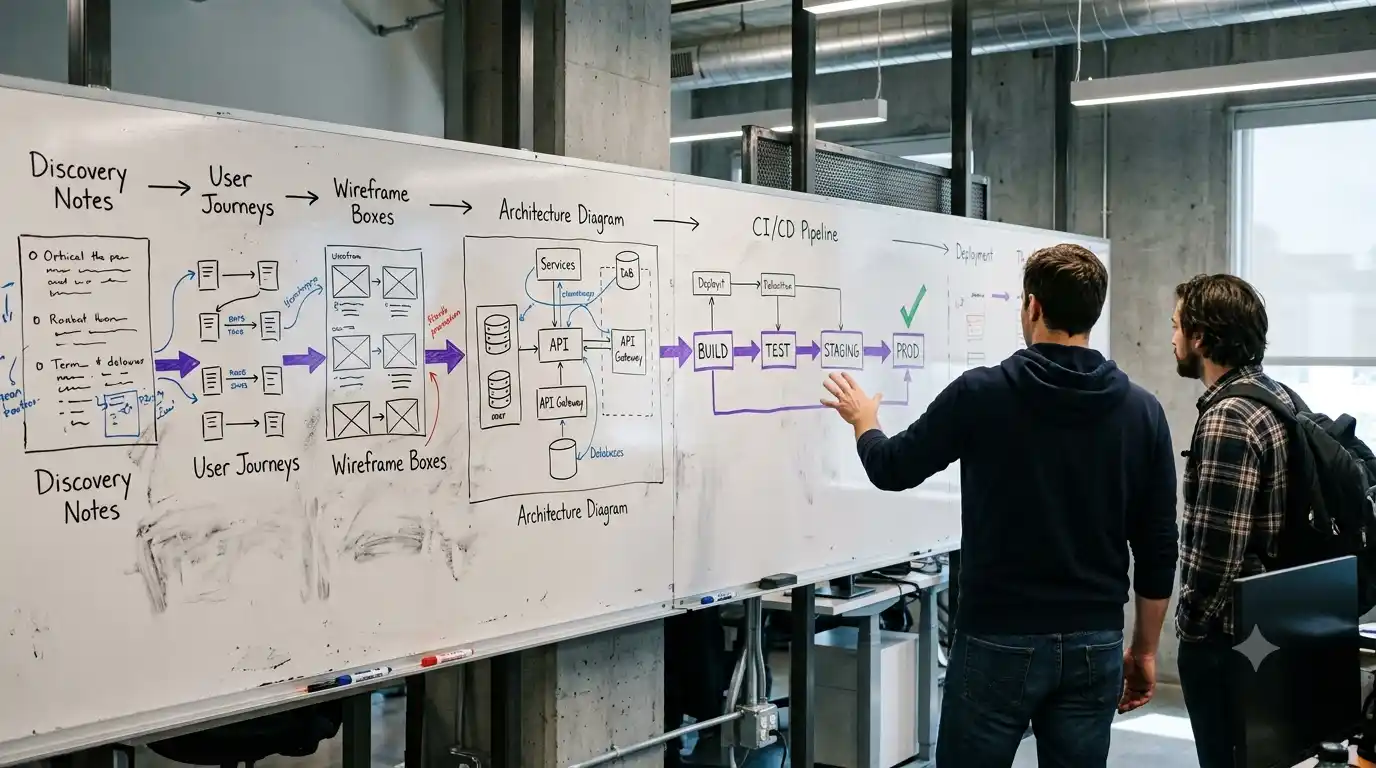
The custom software development process typically moves through discovery, design, development, testing, and launch, each with a clear deliverable. Knowing this sequence in advance is the single biggest lever for reducing perceived risk in a first custom build.
Most anxiety around custom software comes from not knowing what happens between 'we signed a contract' and 'the software exists.' That gap feels like a black box, and black boxes are where trust breaks down.
What this guide covers: what discovery actually produces, how design and development phases interact, how testing is structured, what launch and stabilization look like, and a phase-by-phase table you can hold any vendor accountable to.
Phase 1: Discovery and Requirements
Discovery translates a business problem into a written technical requirements document, usually over one to three weeks. This phase should produce something tangible (user flows, a feature list, or wireframes) not just meeting notes.
In our own project scoping calls, the number one objection we hear from clients burned before is 'we never actually saw a requirements document, just verbal agreements.' A written discovery output is what makes the rest of the process accountable.
Phase 2: Design and Technical Architecture
Design translates requirements into interface mockups, while architecture decisions determine what the system is built on and how it will scale. These run largely in parallel, since interface decisions and technical constraints inform each other.
This is also when integration points with your existing systems get mapped in detail, surfacing any data quality issues before development starts rather than mid-build.
Phase 3: Development in Iterations
Development should happen in short iterations with regular working demos, not as one long stretch that ends in a single reveal. Weekly or biweekly demos let you catch misalignment while it is cheap to fix.
If you are still weighing whether this investment makes sense at all, revisit our build vs. buy framework. The clarity from that decision usually carries through into a tighter development scope.
Phase 4: Testing and Quality Assurance
Testing should include functional testing, integration testing with your existing systems, and user acceptance testing by real end users, not just the development team. Skipping user acceptance testing is how software that technically works still fails in daily use.
This phase catches the gap between what was specified and what people actually need, which written requirements alone can never fully capture.
Phase 5: Launch and Stabilization
Launch is not the finish line. The weeks immediately after are when real usage surfaces issues no amount of testing could predict. A stabilization period with close monitoring and fast bug turnaround should be built into the plan, not treated as scope creep.
Ask any vendor how they define done, and what support looks like in the first month after go-live. For a full checklist of questions like this, see our guide on how to choose a software development company.
The Process at a Glance
Phase
Typical duration
Key deliverable
Discovery
1–3 weeks
Written requirements, user flows
Design & architecture
2–4 weeks
Mockups, technical plan
Development
6–16 weeks
Working software, iterative demos
Testing & QA
2–4 weeks
Tested, user-validated build
Launch & stabilization
2–4 weeks post-launch
Live system, monitored and supported
Timelines overlap in practice more than this table suggests, but the deliverables should remain distinct and visible at each stage.
FAQ
How long does the full custom software development process take?
Most focused business applications take three to six months from discovery to a stable launch. Complex, multi-system platforms can take longer, depending on integration count and compliance requirements.
Can we change requirements after development starts?
Yes, but changes after requirements are locked should go through a formal change request, with impact on cost and timeline documented. That is what keeps flexibility from becoming uncontrolled scope creep.
Do we need technical staff on our side during development?
Not necessarily technical staff, but you need a decision-maker available for regular demos and feedback. Slow feedback loops are one of the most common causes of timeline slippage.
What happens if we skip user acceptance testing?
The software may pass every technical test and still fail in daily use, because real workflows differ subtly from written specifications. Issues surface after launch instead, which costs more to fix.
Is stabilization support included in a typical quote?
It should be, but confirm explicitly. Some vendors treat post-launch bug fixes as new billable work. Our custom software engagements build a stabilization period into the plan from the start.
How do we know when the project is actually done?
Define 'done' during discovery, tied to specific acceptance criteria, not a vague sense of completeness. A written definition of done prevents disputes about scope near the end of the project.
About the author
HM
Helmy Maulidina
Marketing Director
Helmy Maulidina leads marketing at Mauvelab, where she owns the organic-search strategy behind the company's B2B SaaS and custom-software content. She has spent a decade building demand for technical products, pairing hands-on SEO and content architecture with a working knowledge of how engineering teams actually ship, so that Mauvelab's writing ranks for the terms buyers search and guides them toward a strategy call.

.webp)

.webp)