From Spreadsheets to ERP: Signs Your Finance & Supply Chain Have Outgrown Them
HM
Helmy Maulidina
Marketing Director
Every growing company starts on spreadsheets, and that is usually the right call, until the volume of transactions and people involved outpaces what a shared file can safely handle. This guide covers the concrete signs your finance and supply chain operations have outgrown them.
Spreadsheets Aren't the Problem, Scale Is
Spreadsheets fail businesses not because they're bad tools, but because they were never designed to coordinate real-time data across multiple people and departments.
Every growing company starts on spreadsheets, and that's usually the right call early on. They're free, flexible, and require no implementation project. The trouble starts when the number of people editing them, the volume of transactions, and the need for real-time visibility all outpace what a shared file can safely handle.
This guide covers the concrete warning signs across finance and supply chain, the hidden costs of staying on spreadsheets too long, and how to know whether you need a full ERP or a lighter interim solution.
Finance Signs You've Outgrown Spreadsheets
Month-end close taking longer each cycle, version-control conflicts, and manual consolidation across entities are the clearest signs finance has outgrown spreadsheets.
If closing the books takes longer this quarter than last quarter despite steady headcount, that's a scaling signal, not a training problem. Multiple people editing the same workbook inevitably produces version conflicts, the classic "final_v3_ACTUAL.xlsx" problem, and each conflict costs hours of reconciliation.
In our own ERP scoping conversations, the recurring red flag is a finance team manually consolidating numbers from separate spreadsheets for each subsidiary or business unit every month. That manual step is exactly the kind of repetitive, error-prone task ERP systems are built to eliminate.
Supply Chain and Inventory Signs
Stockouts despite "available" inventory on paper, and manual purchase order reconciliation across suppliers, both signal that spreadsheets can no longer keep pace with your supply chain.
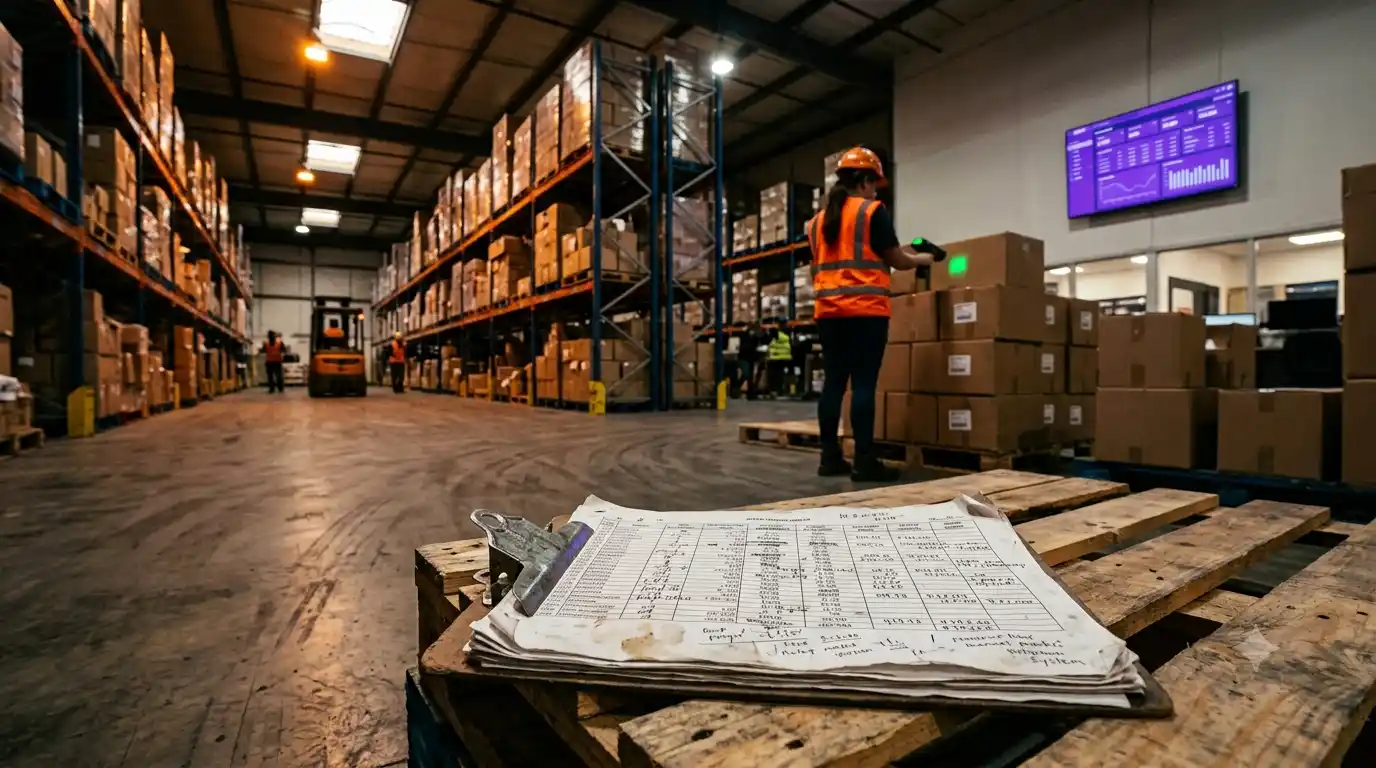
Spreadsheet-based inventory tracking relies on someone manually updating stock counts after every transaction, which works fine at low volume but breaks down as SKU count and order frequency grow. The result is a widening gap between what the spreadsheet says and what's actually on the shelf.
Businesses running multiple warehouses or fulfillment locations on spreadsheets often discover the problem only after a stockout causes a missed customer order, by which point the cost is a lost sale, not just an accounting inconvenience.
The Hidden Cost of Staying on Spreadsheets Too Long
The real cost of delayed ERP adoption isn't the spreadsheets themselves. It's the compounding hours skilled staff spend on manual reconciliation instead of higher-value work.
Finance and operations staff capable of strategic analysis instead spend meaningful portions of their week on manual data entry and cross-checking. That's an opportunity cost that rarely shows up on a budget line but shows up clearly in how slowly a company can respond to new opportunities or risks.
There's also a growing risk cost: spreadsheets have no audit trail, no access controls beyond file permissions, and no built-in validation. As transaction volume grows, so does the exposure to costly manual errors that compound before anyone notices.
Do You Need Full ERP or a Lighter Interim Step?
Not every business that has outgrown spreadsheets needs a full ERP immediately. Sometimes a focused accounting or inventory tool is the right interim step.
If your pain is concentrated in one function, say, inventory tracking, and finance is still manageable, a focused point solution may buy time before a full ERP investment makes sense. If pain spans multiple functions and departments are increasingly dependent on each other's numbers, that's a stronger signal for full ERP.
Open-source platforms like those compared in Odoo vs ERPNext often make sense as a first real ERP step, since they cover multiple functions without the upfront investment of a fully custom build.
Making the Business Case Internally
Building an internal case for ERP investment works best when framed around specific recurring costs, hours lost to reconciliation, delayed decisions, and error rates, rather than abstract modernization.
Leadership teams respond better to concrete, current pain than to future-state promises. Documenting how many hours per month finance spends on manual consolidation, or how often stockouts occur despite "available" inventory, turns an abstract technology decision into a clear cost-benefit case.
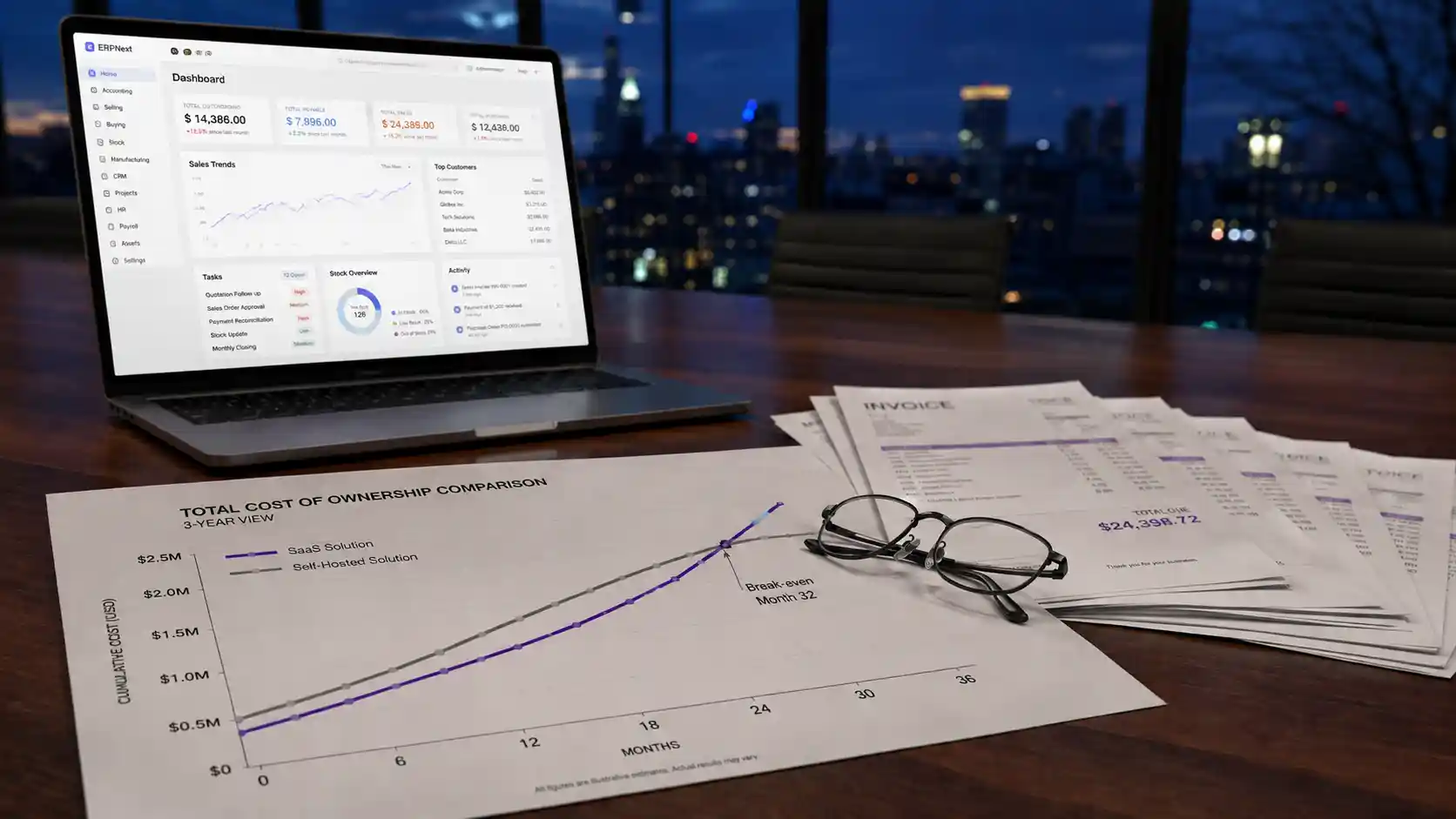
Once the case is made, the build-versus-buy decision matters as much as the decision to move at all. Our custom ERP cost versus SaaS TCO comparison is a useful next read before evaluating vendors.
What a Successful Transition Looks Like
A successful spreadsheet-to-ERP transition starts with the highest-pain function first, rather than attempting a full simultaneous cutover across every department.
Businesses that succeed tend to sequence their rollout: finance first if closing delays are the most acute pain, or inventory first if stockouts are costing sales. This phased approach limits disruption and builds internal confidence before expanding scope.
Working with a partner experienced in enterprise application development at this stage helps map which functions to sequence first based on where the actual pain is concentrated, rather than guessing.
FAQ
How many employees before a business typically needs ERP?
There's no fixed headcount threshold. Transaction volume and process complexity matter more than headcount alone. A ten-person company with high order volume can outgrow spreadsheets faster than a fifty-person company with simple, low-frequency transactions.
Can we migrate spreadsheet data directly into an ERP system?
Partially. Spreadsheet data usually needs significant cleansing before migration, since inconsistent naming and duplicate records that were tolerable in a spreadsheet will break structured ERP data validation. Budget real time for this cleansing step before any migration begins.
What's the risk of waiting too long to move off spreadsheets?
The main risks are compounding staff hours lost to manual reconciliation, growing error rates as volume increases, and reduced ability to respond quickly to new opportunities. Waiting doesn't eliminate the eventual ERP project. It just makes the underlying data messier when you finally start it.
Should finance or supply chain move to ERP first if we can't do both?
Move whichever function has the most acute, quantifiable pain first. If month-end close delays are getting worse, start with finance. If stockouts are costing sales, start with inventory and supply chain.
Is a lightweight accounting tool enough, or do we need full ERP?
If pain is isolated to one function and departments aren't heavily dependent on shared real-time data, a focused tool can be sufficient for now. Once multiple departments need the same data simultaneously, a unified ERP typically becomes the more sustainable choice.
About the author
HM
Helmy Maulidina
Marketing Director
Helmy Maulidina leads marketing at Mauvelab, where she owns the organic-search strategy behind the company's B2B SaaS and custom-software content. She has spent a decade building demand for technical products, pairing hands-on SEO and content architecture with a working knowledge of how engineering teams actually ship, so that Mauvelab's writing ranks for the terms buyers search and guides them toward a strategy call.